
Last Updated: November 2, 2026
Quick Summary
Use gochujang sauce as a late-cooking glaze for stir-fries, tossed with noodles and pasta water, brushed on chicken in the final five minutes, or whisked with honey, mayo, or soy to make a quick condiment. Add it at the end of cooking because its sugar burns fast at high heat.
Gochujang sauce is a Korean condiment built on fermented chili paste that brings sweet, savory, garlicky heat to any dish in one spoonful.
It is thick, so it clings to food; fermented, so it tastes deep rather than just hot; and it plays well with butter, cream, honey, and soy.
Below, we show you how to use it in noodles, stir-fries, chicken, and simple sauces, plus the mistakes that turn a good dish bitter or too salty.
Watch out: gochujang burns fast at high heat because of its sugar content. Add it late in cooking, not at the start.
Toss cooked noodles with a spoon of gochujang sauce, a splash of pasta water, and a knob of butter.
Start with one tablespoon per two servings, then taste. A little goes a long way.
For a creamy version, stir the sauce into warm heavy cream or vodka sauce off the heat. The dairy softens the chili and rounds out the tang.
A common mistake is dumping cold sauce onto dry noodles. Loosen it first with a few tablespoons of hot cooking water, then fold it through.
If you want a full recipe to cook tonight, our guide on how to make gochujang pasta walks through a 20-minute dinner step by step.
Spoon gochujang sauce into a hot wok during the last minute of cooking, after the vegetables and protein are nearly done.
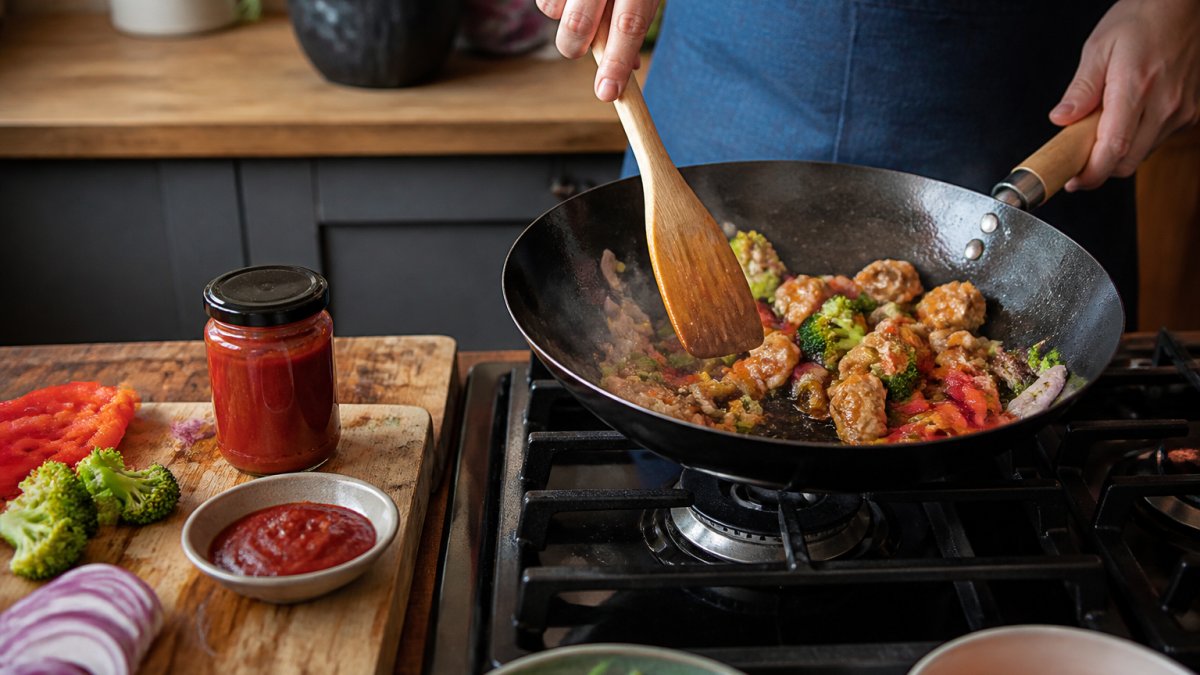
The order matters more than the ingredients:
That last step is where most cooks go wrong. Leave the sauce in too long and the sugars catch, turning the dish acrid.
A measured base for two servings: one and a half tablespoons gochujang sauce, one teaspoon soy sauce, one teaspoon honey or brown sugar, and one teaspoon toasted sesame oil. Whisk in a small bowl, then add it to the pan in the final minute, sweet enough to glaze, salty enough to season the whole pan, and loose enough to coat without pooling.
What to stir-fry with it: sliced chicken thigh, ground pork, shrimp, and firm tofu all take the glaze well.
If you want a full recipe to cook tonight, our guide on how to make gochujang pasta walks through a 20-minute dinner step by step.
Whisk gochujang sauce with one or two partners to build a custom condiment in under a minute. The base formula is simple: two parts gochujang, one part sweetness, one part fat or acid.
Here is a quick reference we keep on the fridge:
| Mix With | Ratio to 2 Tbsp Gochujang | Best For |
|---|---|---|
| Honey or brown sugar | 1 Tbsp | Glazes, wings |
| Mayonnaise | 2 Tbsp | Fries, burgers, dip |
| Soy sauce and sesame oil | 1 Tbsp each | Stir-fries, rice bowls |
| Ketchup | 1 Tbsp | Barbecue-style baste |
| Softened butter | 2 Tbsp | Corn, bread, steak |
| Rice vinegar | 1 tsp | Dipping sauce, slaw |
Start with the right product. Prepared gochujang sauce is already balanced, sweet, salty, and pourable, so it needs only one partner to become a new condiment.
Correcting the four dials. Most sauce problems fall into four categories, and each has a measured fix:
A beginner-friendly base formula. For a universal dipping-and-drizzling sauce, whisk two tablespoons gochujang sauce, one tablespoon honey, one tablespoon rice vinegar, one teaspoon soy sauce, and one teaspoon toasted sesame oil. This makes about four tablespoons, enough for a bowl of rice, a plate of fried chicken, or a tray of roasted vegetables. Scale it linearly; the ratio holds at any size.
Storage and shelf life. Homemade mixed sauces keep in a sealed container in the refrigerator for about a week, the vinegar and honey slow spoilage, but the fresh garlic and scallion many people add do not. Opened jars of prepared gochujang sauce and tubs of paste should stay refrigerated; follow the label for the manufacturer’s shelf-life guidance, and discard anything with an off smell, visible mold, or a changed color. USDA food safety guidance on storing opened sauces is worth a quick read on refrigeration and discard timing.
Dietary notes. Gochujang paste traditionally contains wheat or barley, so readers avoiding gluten should look for a gluten-free label rather than assuming the sauce is rice-based.
Want more ideas for building flavor? Browse our full collection of recipes for new ways to put the sauce to work.
Brush gochujang sauce on chicken as a glaze in the final five minutes of cooking, or use it as a marinade for at least 30 minutes before it hits the heat. The glaze gives you sticky, lacquered skin; the marinade pushes flavor all the way through.
For wings, toss them in sauce after frying or baking, never before. A wet coating steams the crust and you lose the crunch.
For a weeknight sheet-pan dinner, whisk the sauce with a little honey and oil, coat the chicken, and roast at 425°F until cooked through. Baste once halfway.
If you want a richer, cream-based take, our gochujang vodka cream chicken pairs the sauce with a silky pan sauce that comes together in one skillet.
The thing nobody tells you about chicken and gochujang: dark meat handles the sweetness better than breast. Thighs stay juicy while the glaze caramelizes.
Salsanto Gochujang Vodka Sauce blends classic Italian vodka sauce with the fermented heat of Korean chili. It is crafted with high-quality ingredients and balanced heat.
It is versatile for use on pasta and other dishes.
Customers have called it a go-to sauce.
If you have been curious about fusion flavors but worried they would sit unused in the pantry, this is the one to try first.
USDA food safety guidance on storing opened sauces is worth a quick read: keep opened jars in the fridge and follow the label for shelf life.
Gochujang sauce works as a marinade, glaze, stir-fry base, noodle toss, dipping sauce, and even a pasta enhancer. Toss it with rice bowls, brush it on chicken or pork, whisk it into mayonnaise for a spicy spread, or thin it with broth for soup. A little goes a long way because the fermented chili paste brings sweet, savory, and umami notes. Start with 1 to 2 tablespoons per dish and adjust from there.
Yes. Once opened, refrigerate gochujang paste and prepared gochujang sauce to slow fermentation and keep the flavor stable. Keep the lid tight and use a clean spoon each time. Most jars stay good for several months in the fridge, though check the label for the maker’s recommended window. If you see mold, smell an off odor, or notice a change in texture, discard it. Homemade sauces with fresh garlic or perishable mix-ins should be used within a week.
Stir 1 to 2 tablespoons of gochujang sauce into a tomato or vodka sauce during the last few minutes of cooking, or whisk it directly into a cream-based sauce off the heat. The fermented chili adds depth without overwhelming the pasta. For a quick weeknight dish, toss cooked noodles with gochujang sauce, a splash of pasta water, and grated Parmesan. Taste as you go, since brands vary in heat and sweetness.
Mix gochujang with soy sauce, honey or brown sugar, rice vinegar, sesame oil, and garlic for a classic glaze. For a creamy version, whisk it into mayonnaise or yogurt. To mellow the heat, add ketchup, barbecue sauce, or a spoonful of cream. A simple 2:1 ratio of gochujang to sweetener plus a splash of acid gives you a balanced sauce you can use on chicken, noodles, or vegetables.
Weeknight cooking does not need a long ingredient list to taste bold. It needs one sauce that pulls its weight across noodles, stir-fries, chicken, and dips. Salsanto Sauce Co makes that sauce with balanced heat, high-quality ingredients, and a global twist on classic Italian cooking. Get started with Salsanto Sauce Co and turn a simple Tuesday dinner into something the whole table remembers. Shop the Gochujang Vodka Sauce to see what is in the jar.